Iron in Well Water: How to Remove It
AQUAPHOR
home

Groundwater often appears clear, but its impurity content can be dangerously high. A sample from a well should always be laboratory-tested, but iron contamination can be detected visually.

Signs of Iron in Well Water

  • brownish color when exposed to air;
  • sediment forming at the bottom after settling;
  • metallic taste in drinking water or food;
  • rust-colored stains on laundry;
  • orange (not white) scale particles.

Regardless of well depth, water purification from iron is usually necessary.

Non-Chemical Iron Removal Methods for Home Use

To avoid introducing toxins, it’s best to choose methods that do not rely on chemical reactions with hazardous reagents.

Reverse osmosis (RO) Filtration

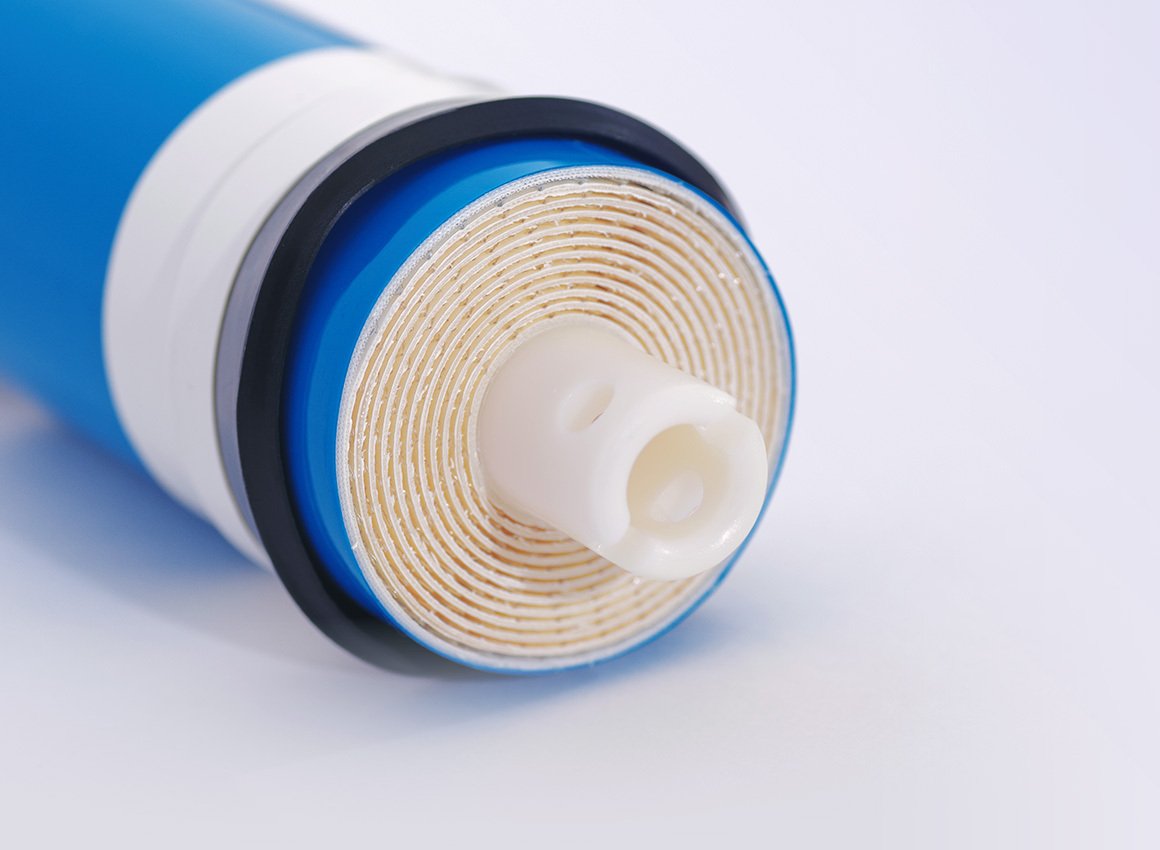
Reverse osmosis is the most advanced, effective, and safe way to remove iron, manganese, hardness salts, and other impurities. The membrane traps all dissolved minerals, allowing only pure H₂O molecules to pass. At the final stage, the water is enriched with beneficial magnesium and calcium in controlled quantities.
Ion Exchange

Ion-exchange resins replace calcium, magnesium, and iron ions with sodium ions. This reduces hardness and decreases iron concentration. It is widely used in households and compatible with many home filtration systems.

Systems like AQUAPHOR S550, AQUAPHOR S800 un AQUAPHOR S1000 can filter the water supply of an entire house or cottage, removing iron, manganese, hardness, and various mechanical and chemical pollutants.

Aeration (Oxidation with Oxygen)

Aerators saturate water with oxygen, oxidizing dissolved ferrous iron into ferric particles, which then precipitate and are captured by mechanical filtration. This method is environmentally friendly but not always effective as a standalone solution; it works best combined with other technologies.

Settling (Sedimentation)

A simple physical method: fill a large container with well water and wait for iron to settle at the bottom. However, this does not remove other impurities, and the tank must be cleaned frequently from insoluble sediment. It is a budget-friendly but insufficiently effective method.

Choose Effective Ways to Remove Iron and Hardness

Clean, transparent water is essential for comfort and health. Proper filtration protects plumbing, appliances, clothes, and surfaces from rust stains, scale, and mineral damage. Whether the issue is elevated calcium in water, magnesium hardness, or iron pollution, modern filtration systems provide a full solution for any home.

Sources

  1. https://www.cdc.gov/drinking-water/safety/
  2. https://www.who.int/publications/i/item/9241546689

Iron in Well Water: How to Remove It

Dec 26, 2025
4 min

Groundwater often appears clear, but its impurity content can be dangerously high. A sample from a well should always be laboratory-tested, but iron contamination can be detected visually.

Signs of Iron in Well Water

  • brownish color when exposed to air;
  • sediment forming at the bottom after settling;
  • metallic taste in drinking water or food;
  • rust-colored stains on laundry;
  • orange (not white) scale particles.

Regardless of well depth, water purification from iron is usually necessary.

Non-Chemical Iron Removal Methods for Home Use

To avoid introducing toxins, it’s best to choose methods that do not rely on chemical reactions with hazardous reagents.

Reverse osmosis (RO) Filtration

Reverse osmosis is the most advanced, effective, and safe way to remove iron, manganese, hardness salts, and other impurities. The membrane traps all dissolved minerals, allowing only pure H₂O molecules to pass. At the final stage, the water is enriched with beneficial magnesium and calcium in controlled quantities.

Ion Exchange

Ion-exchange resins replace calcium, magnesium, and iron ions with sodium ions. This reduces hardness and decreases iron concentration. It is widely used in households and compatible with many home filtration systems.

Systems like AQUAPHOR S550, AQUAPHOR S800 un AQUAPHOR S1000 can filter the water supply of an entire house or cottage, removing iron, manganese, hardness, and various mechanical and chemical pollutants.

Aeration (Oxidation with Oxygen)

Aerators saturate water with oxygen, oxidizing dissolved ferrous iron into ferric particles, which then precipitate and are captured by mechanical filtration. This method is environmentally friendly but not always effective as a standalone solution; it works best combined with other technologies.

Settling (Sedimentation)

A simple physical method: fill a large container with well water and wait for iron to settle at the bottom. However, this does not remove other impurities, and the tank must be cleaned frequently from insoluble sediment. It is a budget-friendly but insufficiently effective method.

Choose Effective Ways to Remove Iron and Hardness

Clean, transparent water is essential for comfort and health. Proper filtration protects plumbing, appliances, clothes, and surfaces from rust stains, scale, and mineral damage. Whether the issue is elevated calcium in water, magnesium hardness, or iron pollution, modern filtration systems provide a full solution for any home.

Sources

  1. https://www.cdc.gov/drinking-water/safety/
  2. https://www.who.int/publications/i/item/9241546689

Tell about it your friends
AQUAPHOR uses cookies

Our websites require some cookies to function properly ("Strictly Necessary"). In addition, we use our own and third-party cookies and similar technologies to analyze site usage, improve and personalize the user experience, and for advertising. For more information, please review the "Customize cookies" link. By continuing you to receive all cookies on all AQUAPHOR websites.

Customize cookies

Reject optional cookies
Accept all cookies